


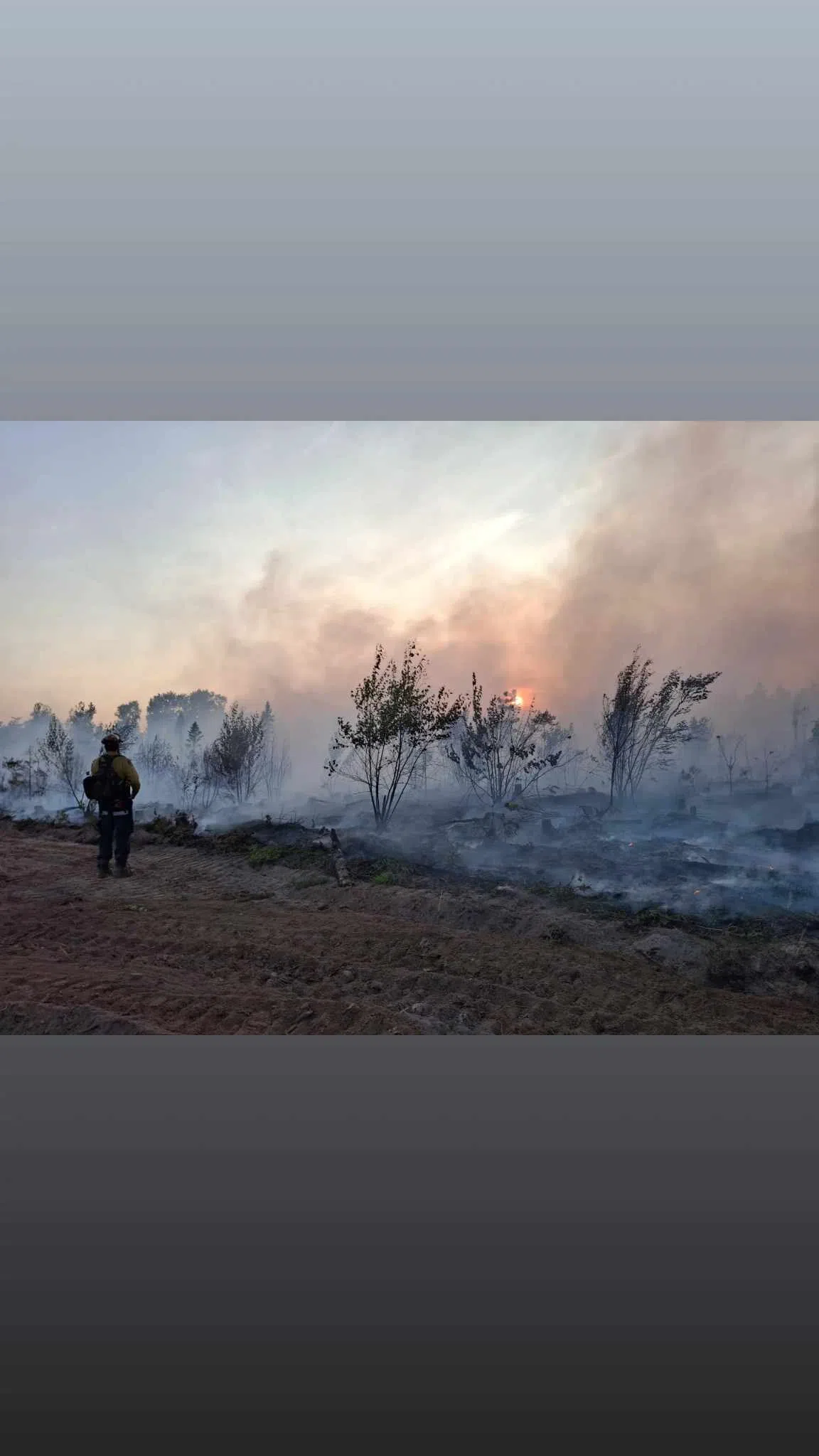
Wildfire numbers are down across the province, but that doesn’t mean the threat is over yet.
“The conditions are still dry. We’ve had the temperatures drop a little bit, so that’s helped a lot, and we had some humidity and a few showers here and there. That has definitely helped a lot, but we’re at a point where if temperatures go up again, and the humidity drops a lot, we could be headed back in the same direction. So I wouldn’t say we’re out of the woods. We still have some fires that are burning,” Department of Natural Resources Wildfire Prevention Officer Roger Collet says.
He adds they are still asking the public to be very cautious and vigilant, and if you don’t need to be on Crown land, then you should avoid it.
The province has seen a bit of rain, and that has moistened the ground a bit, but Collet stressed there hasn’t been enough, and we are still experiencing dry conditions.
“The conditions underneath are still quite dry. We definitely would need a lot more rain than what we’ve had. We need it pretty much province-wide,” Collet says.
The forest fire season ends on October 31, but Collet adds there’s no guarantee that there won’t be any fire after that date. “If the dry conditions continue, we may still see some fires, but by then, the days are a lot shorter and the nights are quite cool, so that helps keep the conditions lower than mid-summer.”
As to the causes for these wildfires, Collet says human activity is the number one cause, but with the extremely dry conditions we had a couple of weeks ago, there are other factors.
Lightning caused around 30 or more fires this season, but Collet says most of the original fires were probably caused by human activity.
There is the potential for more thunderstorms, and that is something that Collet is keeping on his radar. “We had a tree that lightning hit when a storm went through. It burned the inside of a tree, and then the tree finally burned enough that it fell over, and then it caused a fire. So lightning definitely has some potential. We’re definitely keeping an eye on that, doing patrols regularly with aircraft in the areas where we know lightning was seen,