


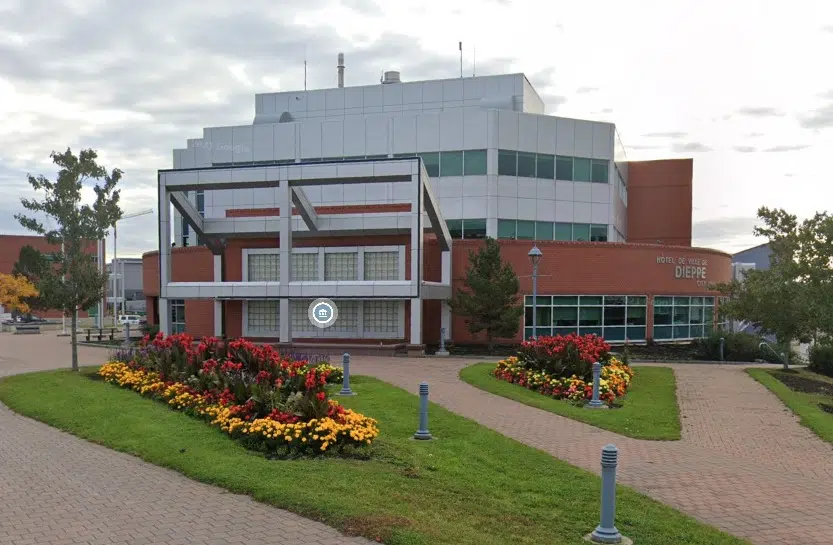
Dieppe may soon become the latest municipality in the region to allow what is known as gentle density within the community.
Proposed changes to the city’s municipal development plan and zoning bylaw would allow owners of low-density residential properties to modify their homes and create up to four units.
It is one of nine commitments the city has made to receive more than $7.2 million from the federal government’s Housing Accelerator Fund.
“The proposal that is being brought forward here is a notion of taking the existing housing stock, the existing urban form in our low-density residential areas, and to look at opportunities to add accessory dwellings within a given property,” Alexandre Girard, the city’s planning and development director, said in an interview.
“We can look at converting a basement into a basement apartment, or converting an attached garage and converting that into an accessory dwelling as well. You can convert perhaps the second floor of your single-attached house or even add a separate unit on the property.”
Addressing housing shortage
Girard said one of the goals is to help create new housing stock within the city to address the housing shortage.
Allowing up to four units as-of-right in low-density zones would also encourage different housing typologies within the city, he said.
“We have seen a large uptake of development of larger apartment buildings or larger multiple-unit dwellings,” said Girard.
“The initiative that is being presented here will look at different housing choices that may be integrated within a single attached house without completely changing neighbourhood character and certainly the physical character of that neighbourhood.”
Hundreds of properties eligible
Close to 3,600 properties, or around 80 per cent of all properties in the R1 and R2 zones, will be eligible for gentle density if the proposal is approved by council, according to Girard.
While that seems like a large number, the director said he expects “modest gains” rather than a huge number of those properties taking advantage of the change.
“This is, from our perspective, more geared towards owner-occupied property owners where we feel that individuals will want to participate in creating accessory dwellings within their own homes in order to accommodate an aging parent or accommodate a younger adult that is having difficulty finding and locating an affordable house to live in,” he added.
Public hearing in October
Property owners who meet the requirements of the zone would be able to get a development and building permit without having to go through the planning advisory committee and council for approval.
But Girard said there will be a specific set of criteria that developers will still have to follow.
“You can’t build a three-storey or a four-storey larger building, the setbacks to adjoining or adjacent properties need to be respected, the architecture of the frontage of the house needs to be respected by a way that we won’t allow for more than two main doors on the frontage of the street,” he said.
“So there are different architectural parameters but also other parameters that will have the objective of ensuring that the character of the neighbourhoods are respected.”
The city is accepting comments on the proposal until Oct. 8 and a public hearing will take place before council on Oct. 14.
Girard said council could approve the first and second reading of the changes on Oct. 27, with full adoption sometime in November.