


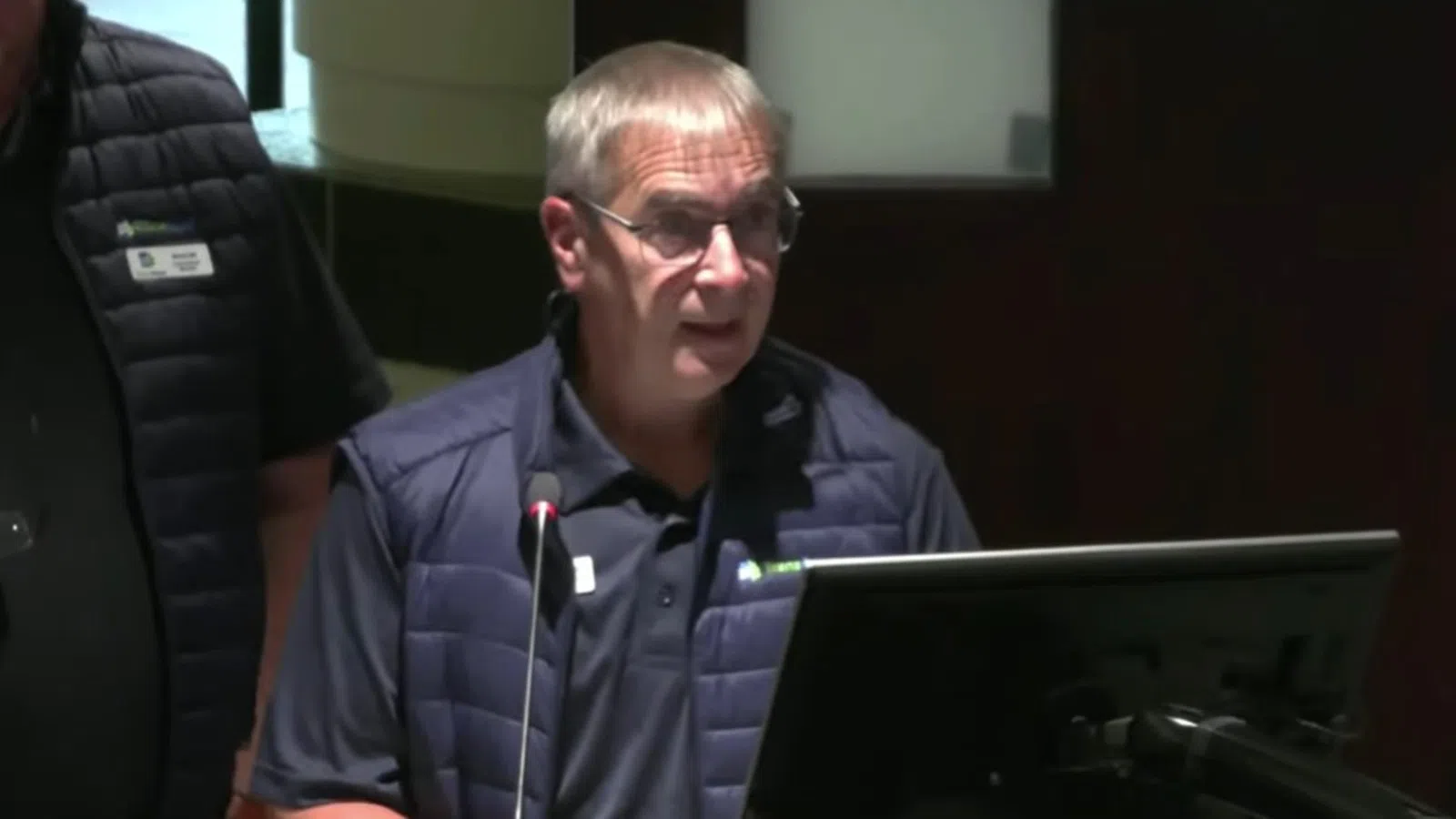
Odour complaints tied to TransAqua’s biosolids program dominated the discussion as the utility presented its annual update to Moncton city council on Monday.
Councillor Bryan Butler said residents in the city’s north end continue to raise concerns about the smell.
“I would say that there’s a certain part of the city of Moncton that they wouldn’t agree with that you’re looking after their quality of life with the smell, and that’s an ongoing thing,” Butler said.
Butler said complaints about the smell were worse when biosolids were processed in Moncton full-time.
Councillor Dave Steeves said many residents have stopped filing official complaints.
“People are just tired of complaining and going through that form. They don’t bother filling out the form anymore,” Steeves said.
TransAqua commissioner Bruce Tait outlined recent projects and financial results.
“At TransAqua, our mission is to collect wastewater in a reliable, cost‑efficient, and environmentally responsible manner,” Tait said.
He said a wastewater heat recovery project could reduce energy use by about 26 per cent once it is operational in 2026. Tait also noted that residential rates have not changed since 2016 and are expected to remain the same in 2026.
A TransAqua representative said the utility processed about 22,000 tonnes of biosolids last year. That figure could rise to 37,000 tonnes by 2037, when both composting facilities are expected to reach full capacity.
Commissioner Éric Arsenault said board members are expected to represent Moncton’s interests but must also consider the financial responsibilities of the regional commission.
“We were informed as committee members that we’re supposed to represent the interests of the city of Moncton, but we also have a fiscal responsibility as a commission,” Arsenault said.
He added that the utility is reviewing three long‑term options for biosolids management, such as continuing composting, lime stabilization and anaerobic digestion. Arsenault said feasibility studies are expected to begin in 2026.
The commission is also trialling sensors to detect contaminants before they damage treatment systems.
Arsenault said an oil spill a few years ago killed the biomass in the bioreactor and cost about $50,000 to resolve.
“Every illegal contaminant destroys the biomass in the reactor and costs us about $50,00,0, and we intend to reduce those costs,” he said.
Council members said they want to see a clear plan for how the utility will address odour issues in the years ahead.