


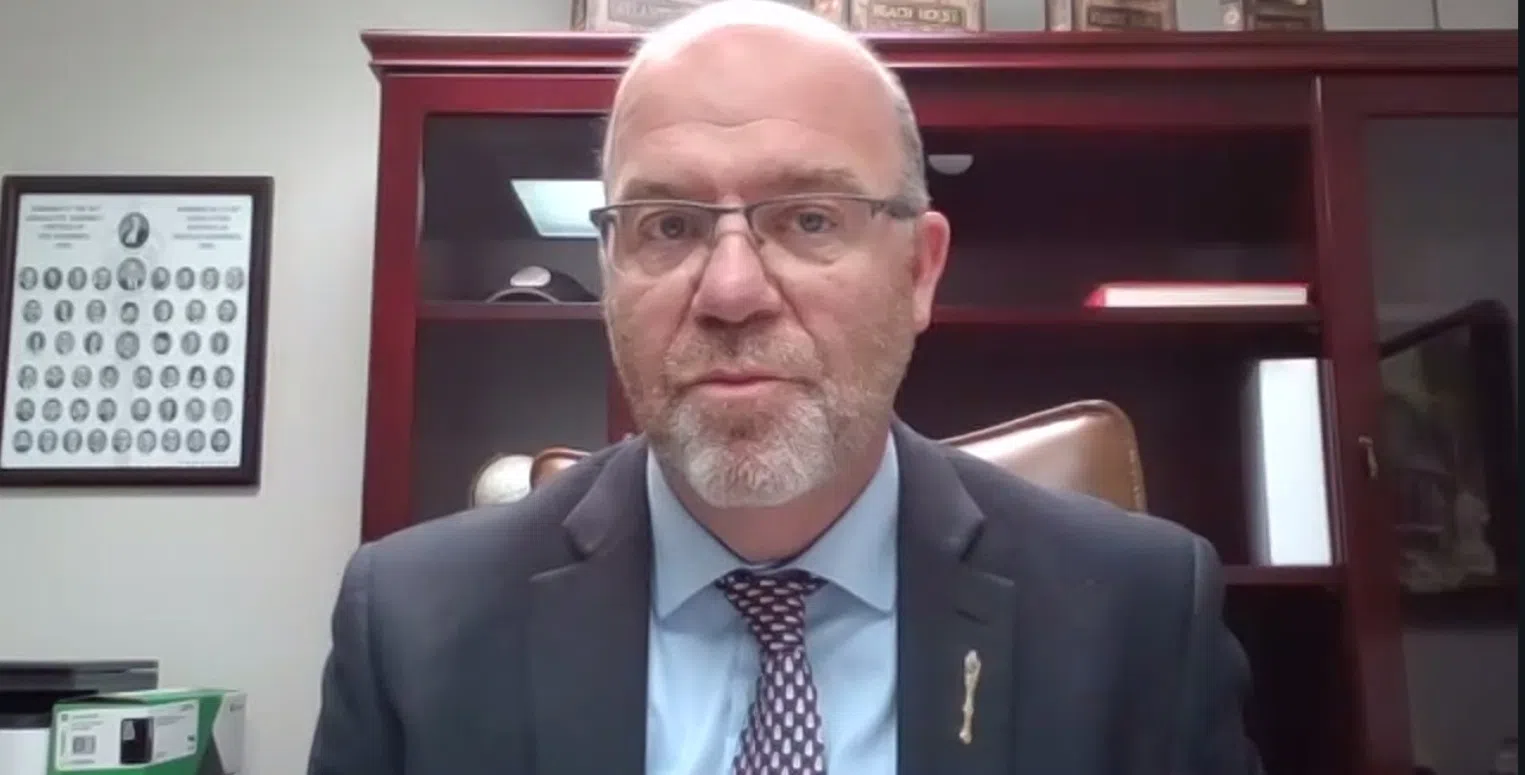
The highest deficit in over 20 years was unveiled on Friday morning during a second-quarter fiscal update for 2025-2026.
The Holt government is projecting a deficit of $834.7 million, compared to the budgeted deficit of $549 million.
Finance Minister Rene Legacy says it could potentially grow even further.
Total revenue is anticipated to be $180.5 million lower than budgeted, driven largely by a reduction in corporate income tax revenue, personal income tax revenue and lower federal conditional grant revenues.
“While this is not the fiscal situation we wanted to be in, years of neglect in our services and infrastructure have led us to this point, and we have to address it,” Legacy stated. “Our government is focused on investing in the services that New Brunswickers deserve, like health care, affordability, housing and education.”
Total expenses are projected to be higher than the budget by $105.2 million. This is mainly due to higher expenses in Health and Social Development.
“There is an increase in spending, but it is different [from the previous government]. In previous years, we often every quarter would talk about the extra costs in healthcare; a lot of it was associated with a bad deal on travel nurses. Some of this year is on different aspects. It’s an increased demand, and some of it is transformational change that is going to take time to take effect,” Legacy stated.
The net debt is currently projected at $13.5 billion.
The department projects real GDP growth of 0.9 per cent in 2025, which is slightly below the private sector average forecast of 1.1 per cent.
When asked about previous budgets under the Conservative government, Legacy explained that the Liberal fiscal updates differ for good reason: “Yes, the previous government had success in getting the bottom line, getting the surpluses in, but when I look from department to department and under investments, and the need that has to be invested that had been underinvested in. Now we’re working with a patchwork of short-term fixes and nothing stable. It’s becoming very costly, and we need to correct that.
Legacy adds that they’re now making long-term investments, with benefits that may not show for another 5 to 10 years. “We have to make that move for the good of the province and the future of the economy,” he adds.
He also stressed there will be tough decisions ahead, during the remainder of this fiscal year, and in the 2026-27 budget, “If nothing else changes on revenues or some improvement on expenses, there is the potential that it could grow by the fourth quarter.”
The second-quarter results are available online.